
Nature Facts: Discover Earth’s Most Powerful Forces

Discover fascinating nature facts, from powerful natural forces to ecosystems and weather systems. Learn how nature shapes life on Earth.
90% of people don’t realise how connected nature really is…
Nature is full of powerful forces, hidden systems, and incredible environments that shape the world around us. From the depths of the ocean to the peaks of mountains, and from extreme weather to rich ecosystems, these nature facts reveal just how connected everything really is.
These nature facts highlight how energy beneath the Earth’s surface drives some of the most dramatic changes we see.
In this guide, you will explore the most fascinating aspects of nature, understand how natural systems work together, and discover surprising facts that show the true power of our planet.
Essential Nature Facts You Should Know
Some of the most dramatic events on Earth come from forces beneath and above the surface. Shifting tectonic plates, extreme weather, and sudden releases of energy can reshape landscapes in moments. Understanding these forces helps explain how the planet is constantly changing.
For example, ground movement and seismic activity are explored in earthquake facts, where pressure builds deep beneath the surface before being released. In some cases, this movement can trigger massive ocean waves, as explained in tsunami facts.
Below the surface, pressure and heat can also lead to explosive eruptions. These events are covered in volcano facts, showing how molten rock reaches the surface and reshapes entire regions.
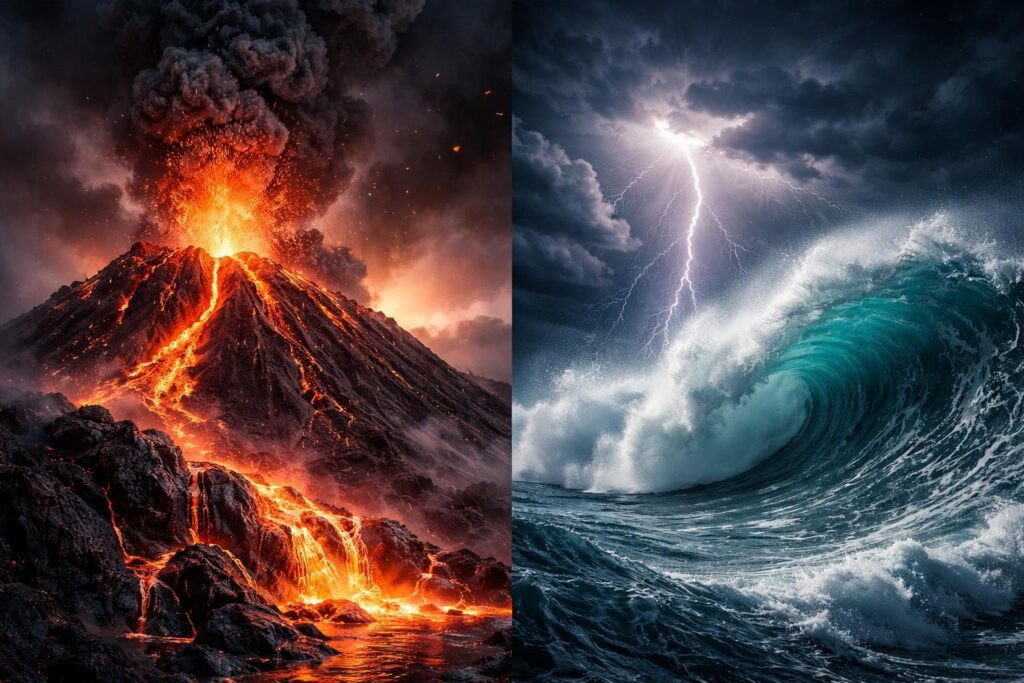
Above the surface, the atmosphere creates its own powerful events. Storm systems can generate intense energy, producing lightning and extreme winds, as explored in lightning facts and tornado facts.
Oceans, Water, and Global Systems
Water connects nearly every part of the planet, forming a global system that supports life and influences climate. The oceans cover most of Earth’s surface and play a critical role in regulating temperature and weather patterns.
You can explore this in more detail in ocean facts, where global currents and deep-sea ecosystems reveal how vast and complex these environments are.
Water also moves across land through rivers, shaping landscapes and supporting ecosystems. These processes are explained in river facts, where flowing water carves valleys and connects land to sea.
In some regions, water creates dramatic natural features such as waterfalls. One of the most impressive examples is explored in Victoria Falls facts, showing how water and erosion combine to form powerful natural landmarks.
Oceans and colder regions also produce massive floating ice formations. These are covered in iceberg facts, revealing how much of these structures remains hidden beneath the surface.
Many of these nature facts show how water connects nearly every part of the planet.
According to research from NOAA, oceans play a key role in regulating climate and supporting life on Earth. View Source →
Landscapes and Natural Formations
The Earth’s surface is constantly shaped by movement, erosion, and environmental conditions. From towering peaks to vast valleys, landscapes tell the story of how the planet evolves over time.
Mountain formation is explored in mountain facts, where tectonic forces push land upward to create some of the highest points on Earth.
These elevated regions often interact with ice and water, influencing the formation of glaciers and ice systems that eventually connect to ocean environments.
Even underwater, landscapes continue to evolve, linking back to ocean systems and global environmental changes.
Ecosystems and Life on Earth
Nature is not just about physical forces, it is also about the ecosystems that support life. These environments are complex, interconnected, and essential for maintaining balance on the planet.
Rainforests are among the richest ecosystems on Earth, supporting a vast range of species. You can explore this in rainforest facts, where biodiversity and climate regulation play a key role.
Marine ecosystems are equally important, especially in coral reef environments. One of the most remarkable examples is explored in Great Barrier Reef facts, highlighting how delicate and diverse ocean life can be.
These ecosystems are all connected through global systems such as climate, water cycles, and environmental change.
Understanding these nature facts helps reveal how delicate and important these ecosystems really are.
The Atmosphere and Weather Systems
The atmosphere plays a crucial role in shaping weather, climate, and environmental conditions. Clouds, storms, and air movement all work together to influence what happens on the ground.
You can explore this further in cloud facts, where atmospheric processes create everything from gentle weather patterns to powerful storms.
These systems are closely connected to ocean temperatures, land conditions, and global climate patterns, showing how every part of nature is linked together.
Why Nature Matters
Nature is not made up of isolated systems. Everything is connected, from the smallest cloud formation to the largest ocean current. Understanding these connections helps explain how the planet works and why protecting these systems is so important.
By exploring these nature facts, you gain a deeper understanding of the forces that shape our world, the ecosystems that support life, and the powerful processes that continue to transform the Earth every day.
