Discover fascinating iceberg facts, from hidden underwater mass to extreme dangers. Learn why icebergs are among nature’s most mysterious formations.
Most people only see the tip of an iceberg, but these iceberg facts reveal a much deeper and more fascinating story. Icebergs are massive chunks of ice that break away from glaciers and float through the ocean, often hiding most of their size beneath the surface.
In this guide, you will discover how icebergs form, why they are so dangerous, and some surprising facts that show just how powerful and mysterious they really are.
Interesting Iceberg Facts You Should Know
Fact 1: Most of an iceberg is underwater
About 90% of an iceberg’s mass lies below the surface, making only a small portion visible above water.

Fact 2: Icebergs come from glaciers
Icebergs form when large pieces of glaciers break off in a process known as calving.
These massive ice formations originate from environments similar to those described in mountain glaciers.
Fact 3: They can be enormous
Some icebergs are larger than cities and can stretch for miles across the ocean.
Fact 4: Icebergs can be thousands of years old
The ice within an iceberg may have formed from snowfall thousands of years ago.
Fact 5: They are made of freshwater
Despite floating in saltwater, icebergs consist entirely of freshwater.
And it gets even more fascinating…
Fact 6: Icebergs can travel long distances
Ocean currents can carry icebergs far from their origin, sometimes across entire oceans.
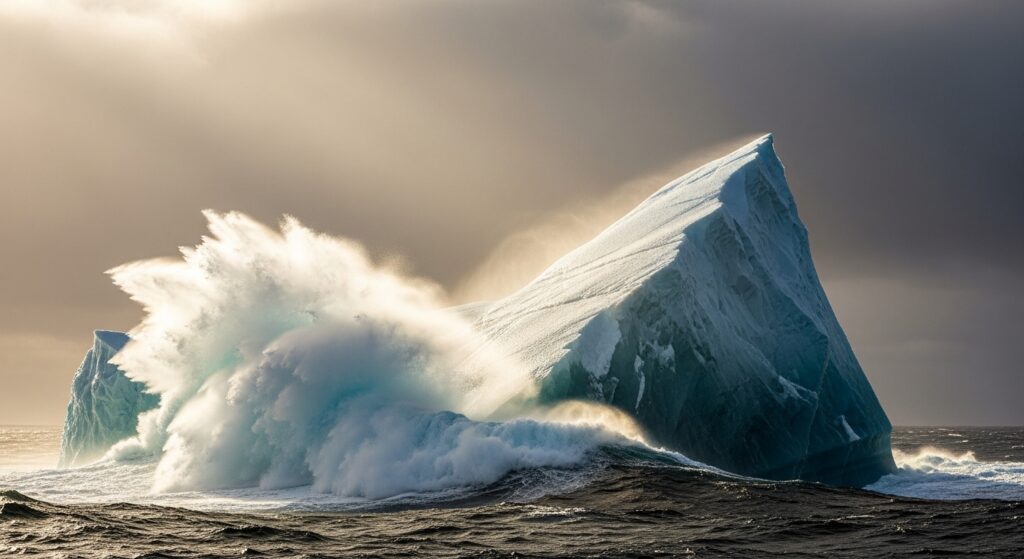
Fact 7: They can flip over
As ice melts unevenly, icebergs can suddenly roll or flip, creating dangerous waves.
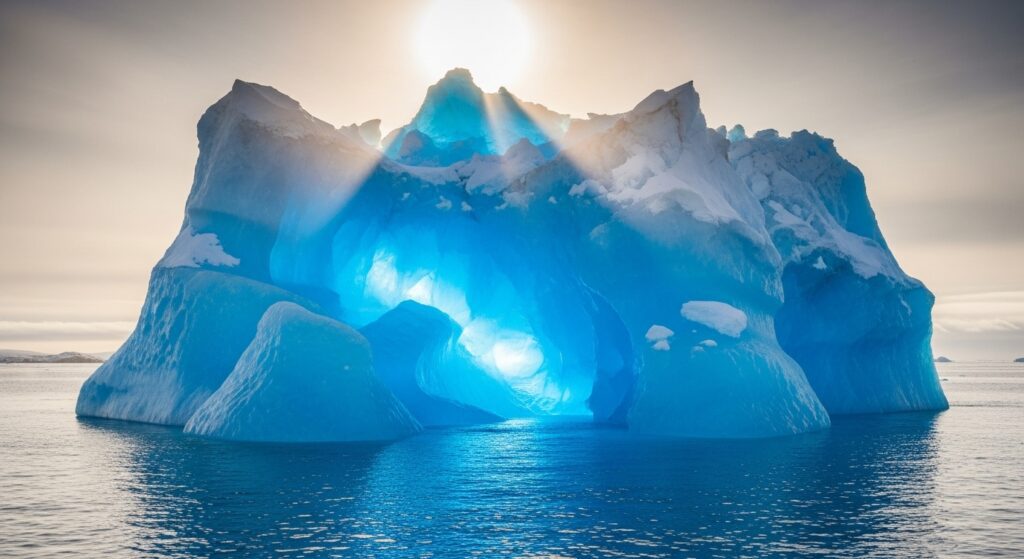
Fact 8: Icebergs can appear blue
Compressed ice absorbs red light, giving some icebergs a deep blue colour.
Fact 9: They played a role in history
The sinking of the Titanic in 1912 is one of the most famous events involving an iceberg.
Fact 10: Icebergs can produce sounds
Melting and cracking icebergs can create loud popping and rumbling noises.
And it keeps getting more surprising…
Fact 11: Some icebergs have stripes
Layers of snow, minerals, and air bubbles can create striped patterns within the ice.
Fact 12: Icebergs melt faster in warm water
Warmer ocean temperatures can accelerate melting, reducing iceberg size quickly.
Fact 13: They are tracked for safety
Organisations monitor iceberg movement to prevent accidents with ships.
Fact 14: Icebergs can damage ships
The hidden mass beneath the surface makes them extremely dangerous to vessels.
According to research from the National Snow and Ice Data Center, icebergs form from glaciers and can travel long distances across oceans. View Source →
Fact 15: They can affect ocean ecosystems
Melting icebergs release nutrients that can support marine life.
And there’s even more…
Melting icebergs also influence ocean systems like those explained in our ocean guide.
Fact 16: Icebergs exist in both polar regions
They are commonly found in the Arctic and Antarctic oceans.
Fact 17: Some icebergs are flat-topped
Tabular icebergs have flat surfaces and steep sides, often breaking off ice shelves.
Fact 18: Icebergs can reflect sunlight
Their bright surfaces help reflect solar energy, influencing local climate conditions.
Fact 19: They can create hazards for offshore structures
Icebergs can threaten oil rigs and other ocean-based infrastructure.
Fact 20: Scientists study them to understand climate change
Iceberg movement and melting provide important data about global climate patterns.
According to Britannica, most of an iceberg’s mass remains underwater, making them difficult to detect and dangerous to ships. View Source →
Explore More Nature
If you found this interesting, you might enjoy learning about frozen landscapes in mountain environments or how ice interacts with water systems in ocean ecosystems. You can also explore more in our full nature facts section.
Conclusion
These iceberg facts show how much lies beneath the surface of these massive ice formations. From their hidden size to their impact on oceans and climate, icebergs remain one of nature’s most fascinating phenomena.
What are some interesting iceberg facts?
Iceberg facts include their massive hidden size, freshwater composition, and ability to travel across oceans. Most of their mass lies underwater.
How do icebergs form?
Icebergs form when chunks of glaciers break off into the ocean through a process called calving.
Why are icebergs dangerous?
Icebergs are dangerous because most of their mass is hidden underwater, making them difficult for ships to detect.
Where are icebergs found?
Icebergs are commonly found in polar regions, especially around Antarctica and the Arctic.