Discover 18 fascinating whale facts about the largest animals on Earth, including their intelligence, deep diving abilities, migration, and incredible ocean communication.
Whales are among the most extraordinary creatures ever to live on Earth. These enormous marine mammals dominate the oceans with their size, intelligence, and mysterious behaviours. The most surprising whale facts reveal how these animals communicate across vast distances, dive deeper than any other mammals, and travel thousands of miles each year.
From the enormous blue whale to the deep-diving sperm whale, whales have evolved remarkable adaptations for life in the ocean. In this article you will discover fascinating whale facts about their biology, social behaviour, communication, and the crucial role they play in maintaining healthy ocean ecosystems.are some fascinating facts about whales:
Amazing Whale Facts About the Giants of the Ocean
Fact 1 – The Blue Whale Is the Largest Animal Ever
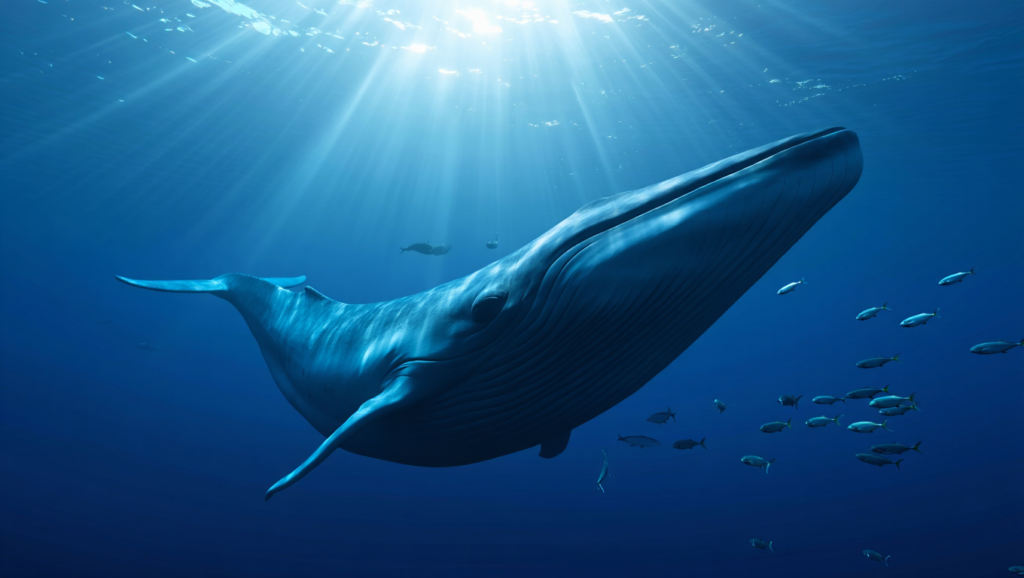
The blue whale is the largest animal known to have ever lived on Earth. Adult blue whales can grow up to 100 feet long and weigh more than 200 tons.
Their hearts alone can weigh as much as a small car, while their tongues may weigh as much as an elephant.
Fact 2 – There Are Two Main Types of Whales
One of the most interesting whale facts is that whales fall into two major groups.
Baleen whales filter small prey such as krill using comb-like plates called baleen.
Examples include:
- Blue whales
- Humpback whales
- Gray whales
Toothed whales have teeth and hunt larger prey.
Examples include:
- Killer whales (orcas)
- Sperm whales
- Dolphins
Fact 3 – Whales Live in Every Ocean
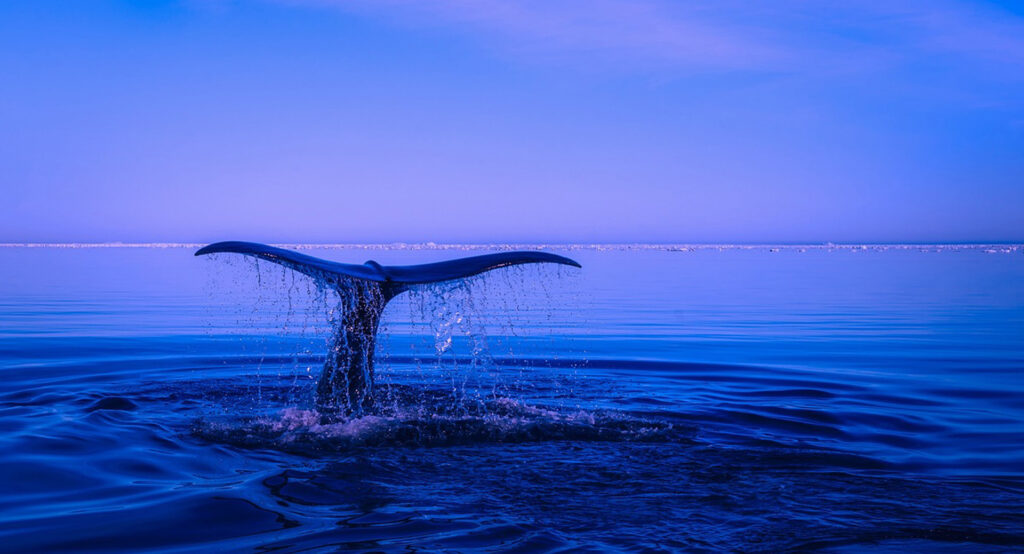
Whales can be found in all of the world’s oceans, from the icy Arctic to the waters surrounding Antarctica.
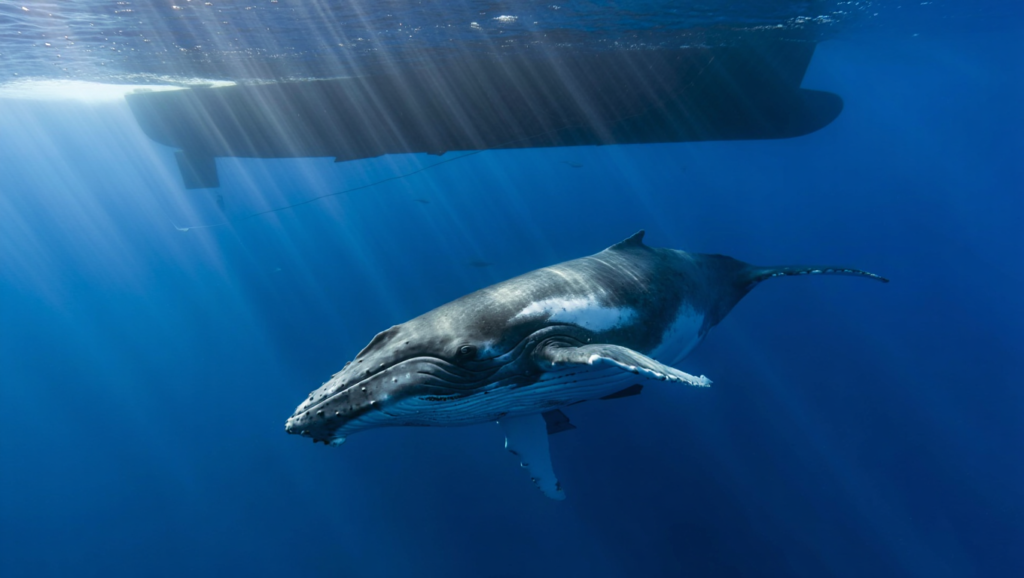
Some whales migrate enormous distances each year. Humpback whales, for example, travel thousands of miles between feeding areas near the poles and breeding areas in tropical waters.
Fact 4 – Whales Are Mammals
Despite living in the ocean, whales are mammals.
That means they:
- Breathe air through lungs
- Are warm-blooded
- Give birth to live young
- Feed their babies milk
Like other mammals, whales must return to the surface regularly to breathe.
Fact 5 – Some Whales Dive Deeper Than Any Other Mammal
One of the most incredible whale facts involves their diving abilities.
The Cuvier’s beaked whale can dive nearly 3,000 metres (9,800 feet), making it the deepest diving mammal known.
Sperm whales also dive extremely deep in search of squid and other prey.
Their bodies are specially adapted with:
- collapsible lungs
- large oxygen reserves in muscles
- slow heart rates during dives
Fact 6 – Whales Live in Social Groups Called Pods
Many whales live in groups called pods.
These social groups may contain:
- close family members
- several generations of whales
- cooperative hunting groups
Orcas are famous for their complex family pods led by a female matriarch.
Fact 7 – Whales Are Threatened by Human Activity
Sadly, many whale species are endangered.
Major threats include:
- commercial whaling
- climate change
- plastic pollution
- ship collisions
- noise pollution from ships and sonar
Conservation efforts around the world aim to protect whale populations and their habitats.
Fact 8 – Whales Help Maintain Healthy Oceans
One of the most surprising whale facts is their role in ocean ecosystems.
Whales help fertilise the ocean through a process known as the whale pump.
When whales feed at depth and release nutrient-rich waste near the surface, they help support phytoplankton growth, which forms the base of the marine food chain.
Fact 9 – Whales Use Complex Sounds to Communicate
Whales communicate using a variety of sounds including:
- songs
- whistles
- clicks
Humpback whale songs can last for hours and travel across huge distances underwater.
Scientists continue to study these sounds to better understand whale communication.
According to research highlighted by National Geographic, whale vocalisations may contain complex structures similar to language.
Fact 10 – Whale Watching Is Popular Worldwide
Millions of people participate in whale watching tours every year.
These tours allow people to observe whales in their natural habitat and help support conservation awareness.
Responsible whale watching keeps a safe distance from animals to avoid disturbing them.
Fact 11 – Whales Are Among the Loudest Animals on Earth
Blue whales produce sounds reaching 188 decibels, making them the loudest animals known.
Sperm whales produce powerful clicks used for echolocation, which can reach 230 decibels at close range.
These sounds allow whales to navigate and locate prey deep underwater.
Fact 12 – Some Whales Live for Over 200 Years
Bowhead whales are believed to live more than 200 years, making them the longest-living mammals on Earth.
Many other whale species live several decades.
Fact 13 – Whale Oil Was Once Highly Valuable
In the 18th and 19th centuries whale oil was widely used for:
- candles
- lubricants
- cosmetics
This demand led to large-scale commercial whaling that severely reduced whale populations.
Fact 14 – Whales Are Highly Intelligent
Many whale species show advanced intelligence.
Researchers have observed:
- complex social behaviour
- cultural traditions
- problem solving abilities
Orcas, for example, teach hunting techniques to younger members of their pods.
According to Britannica, whale brains are highly developed in areas linked to social behaviour and communication.
Fact 15 – Whale Falls Create Entire Ecosystems
When whales die and sink to the ocean floor, their bodies create what scientists call whale falls.
These carcasses provide food for deep-sea organisms and can support entire ecosystems for decades.
Fact 16 – Climate Change Is Affecting Whale Migration
Changing ocean temperatures are altering the distribution of whale prey such as krill and plankton.
This affects migration patterns and feeding behaviour for many whale species.
Fact 17 – Whales Rarely Attack Ships
Contrary to some myths, whales generally avoid ships and submarines.
Most collisions occur accidentally when whales surface in busy shipping areas.
Fact 18 – There Are Around 90 Species of Cetaceans
Whales belong to a larger group of marine mammals called cetaceans.
This group includes:
- whales
- dolphins
- porpoises
Each species has unique characteristics, habitats, and behaviours.
Related Animal Facts You Might Enjoy
Whales are known for their intelligence and communication, traits that are also found in land animals. For example, elephant communication behaviour shows how complex social systems can develop.
Migration and survival strategies vary across species, and this can be compared to bear seasonal behaviour, where animals adapt to changing environments.
According to whale biology and species overview from Britannica, whales are marine mammals belonging to the cetacean family and include some of the largest animals ever to exist.
Research highlighted by blue whale facts and behaviour from National Geographic explains that blue whales can reach lengths of over 30 metres and produce some of the loudest sounds of any animal.
FAQs About Whale Facts
What are the most interesting whale facts?
Some of the most fascinating whale facts include their massive size, their ability to communicate using songs, and their deep diving abilities that allow them to reach thousands of metres below the surface.
How big can whales grow?
Blue whales are the largest animals ever recorded, reaching lengths of around 30 metres and weighing more than 200 tons.
How long do whales live?
Some whale species live for several decades, while bowhead whales can live more than 200 years.
Why are whales important to the ocean?
Whales help maintain healthy marine ecosystems by redistributing nutrients and supporting the growth of plankton, which forms the base of the ocean food chain.
Conclusion
Whales remain some of the most extraordinary animals in the natural world. These remarkable whale facts reveal just how intelligent, powerful, and important these marine giants are to the health of the world’s oceans. Protecting whale populations is crucial for maintaining a balanced marine ecosystem and preserving one of nature’s most awe-inspiring creatures.