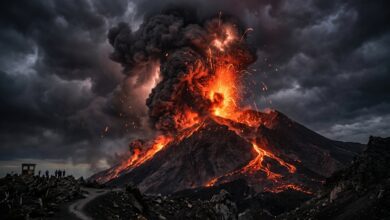
Discover 14 chilling glacier facts, from how they form to how they shape Earth. Explore these massive ice giants and their impact on our planet.
These glacier facts reveal the incredible power and importance of some of Earth’s most fascinating natural features. Glaciers may look slow and frozen, but they are constantly moving, shaping landscapes, and storing vast amounts of freshwater. Found in polar regions and high mountains, these massive ice formations play a critical role in regulating the planet’s climate.
In this guide, you will discover how glaciers form, how they move, and why they are so important to ecosystems and sea levels. Whether you enjoy science, geography, or natural wonders, these facts will give you a deeper understanding of glaciers.
If you are interested in extreme environments, these Mount Everest facts explore one of the most challenging landscapes on Earth.
🧊 14 Glacier Facts
🌍 Fact 1: Glaciers Store Most Freshwater
Glaciers hold about 69 percent of the world’s freshwater, making them essential to global water supply.
❄️ Fact 2: Formed Over Thousands of Years
Glaciers form when snow accumulates and compresses into dense ice over long periods.
🧊 Fact 3: They Move Slowly
Although they appear still, glaciers are constantly moving due to gravity and internal pressure.
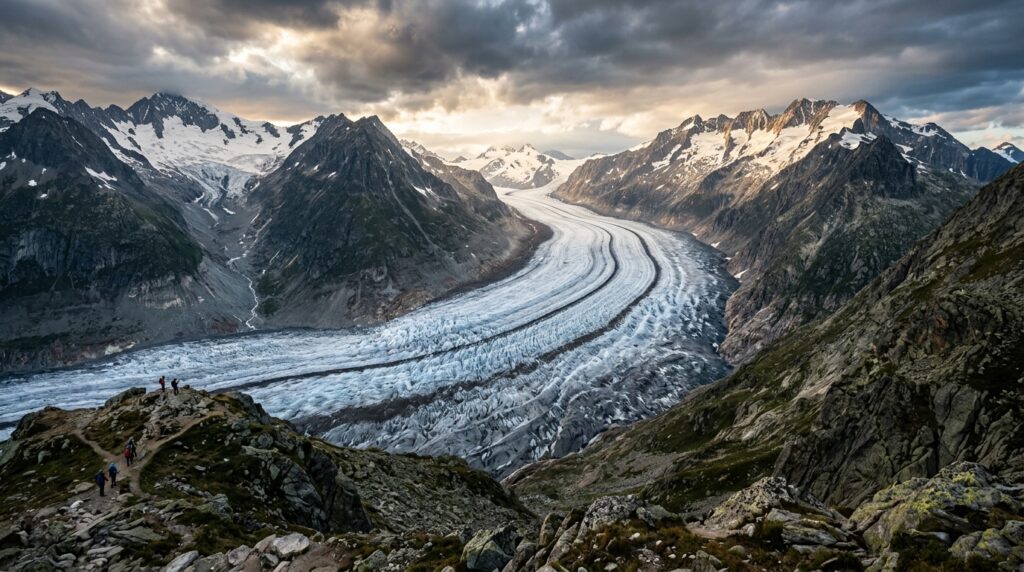
🏔️ Fact 4: Found on Every Continent
Glaciers exist on every continent except Australia.
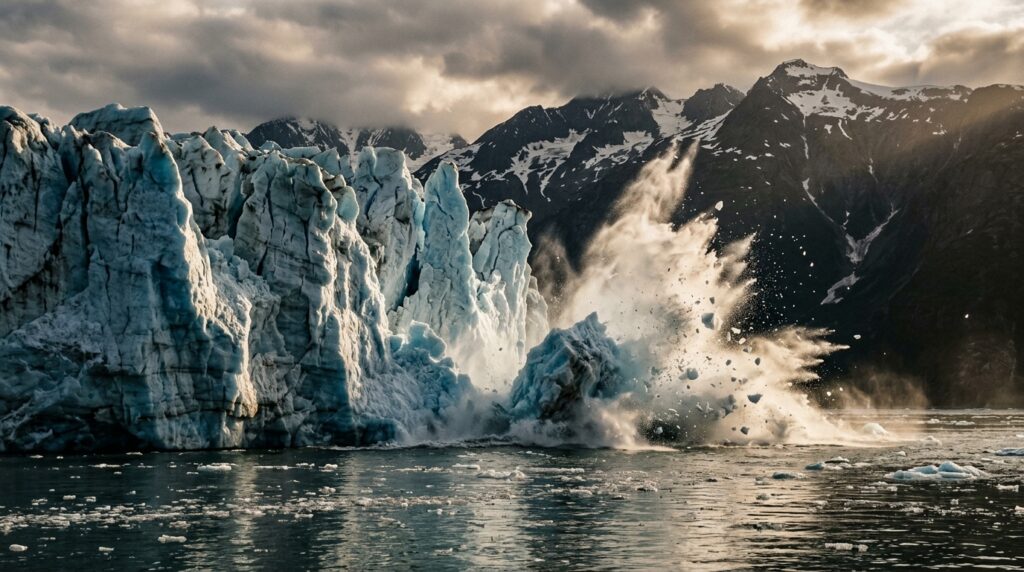
🌊 Fact 5: Icebergs Come From Glaciers
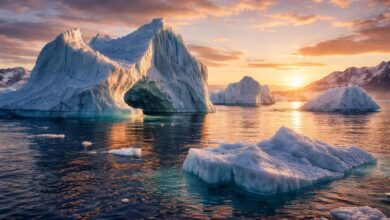
When glaciers reach the sea, chunks can break off to form icebergs.
🌡️ Fact 6: Sensitive to Climate Change
Glaciers are shrinking in many parts of the world due to rising temperatures.
🧭 Fact 7: Shape the Landscape
Glaciers carve valleys, fjords, and mountains through erosion.
You can also discover how erosion shapes land in warmer climates with these Grand Canyon facts.
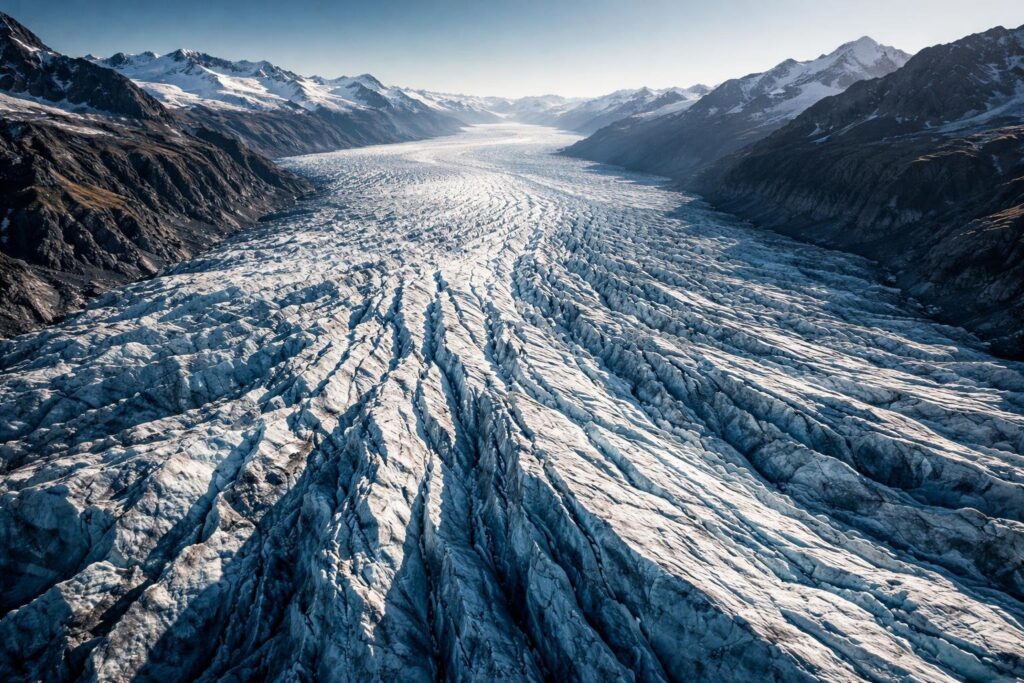
🪨 Fact 8: Carry Rocks and Debris
As they move, glaciers transport rocks, creating features like moraines.
🧊 Fact 9: Can Be Miles Thick
Some glaciers are several miles thick, especially in Antarctica.
🌍 Fact 10: Cover Large Areas
Glaciers and ice sheets cover about 10 percent of Earth’s land surface.
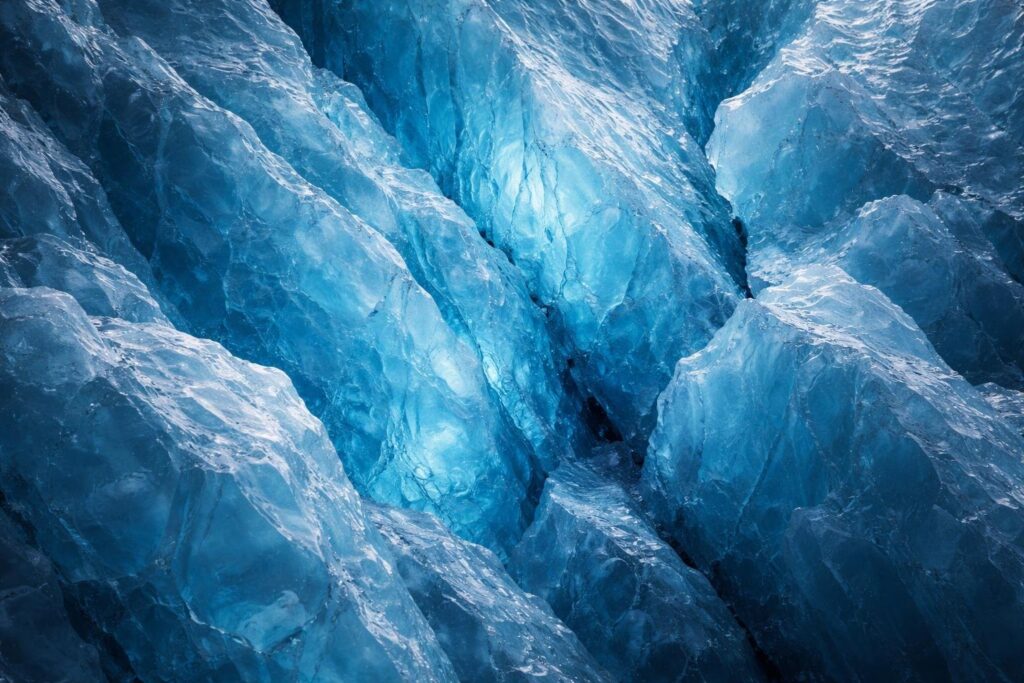
🧊 Fact 11: Blue Ice Is Common
Glacier ice often appears blue because of how it absorbs and reflects light.
🌊 Fact 12: Influence Sea Levels
Melting glaciers contribute to rising sea levels worldwide.
🧊 Fact 13: Glaciers Can Surge
Some glaciers suddenly speed up, moving much faster than usual.
🧬 Fact 14: Preserve Ancient History
Glaciers trap air bubbles and materials that help scientists study Earth’s past climate.
Related Facts You Might Enjoy
Glaciers play a key role in shaping the Earth. You can explore extreme peaks in these Mount Everest facts, or discover canyon formations in these Grand Canyon facts. For coastal environments, these harbor of Rio de Janeiro are worth exploring. Browse more in our places and landmarks facts collection.
External Authority Links
Glaciers play a crucial role in Earth’s climate and water systems. According to Britannica, they store a large portion of the world’s freshwater and shape landscapes through erosion.
Their response to climate change is also significant. Research from National Geographic highlights how melting glaciers are contributing to rising sea levels globally.
FAQ Section
What is a glacier?
A glacier is a large mass of ice that forms from compacted snow and moves slowly over land due to gravity.
Where are glaciers found?
Glaciers are found in polar regions and high mountain areas across most continents.
Why are glaciers important?
They store freshwater, shape landscapes, and help regulate Earth’s climate.
Are glaciers disappearing?
Many glaciers are shrinking due to rising global temperatures and climate change.
Conclusion
These glacier facts highlight the importance of these powerful ice formations in shaping our planet. From storing freshwater to influencing climate, glaciers remain one of Earth’s most vital natural features.