Discover 17 colourful aurora borealis facts, from how the northern lights form to where to see them. Explore this stunning natural phenomenon.
These aurora borealis facts reveal one of the most mesmerising natural displays on Earth. Known as the northern lights, this incredible phenomenon lights up the night sky with waves of green, purple, and red. But behind the beauty lies fascinating science involving the Sun, Earth’s magnetic field, and atmospheric gases. From how these lights form to why they appear near the poles, there is far more to the aurora than meets the eye. In this guide, you will discover surprising insights into their colours, movement, and global significance.
If you enjoy natural phenomena, these glacier facts explore another powerful force shaping the planet.
🌌 17 Aurora Borealis Facts
🌍 Fact 1: Caused by Solar Particles
The aurora borealis occurs when charged particles from the Sun collide with Earth’s atmosphere.
🌌 Fact 2: Happens Near the Poles
The lights are usually visible near the Arctic and Antarctic regions due to Earth’s magnetic field.
⚡ Fact 3: Linked to Solar Wind
Solar wind carries energetic particles from the Sun toward Earth, triggering auroras.
🌈 Fact 4: Different Colours Come from Gases
Oxygen creates green and red lights, while nitrogen produces blue and purple hues.
🌊 Fact 5: Looks Like Moving Curtains
Auroras often appear as flowing curtains, arcs, or waves across the sky.
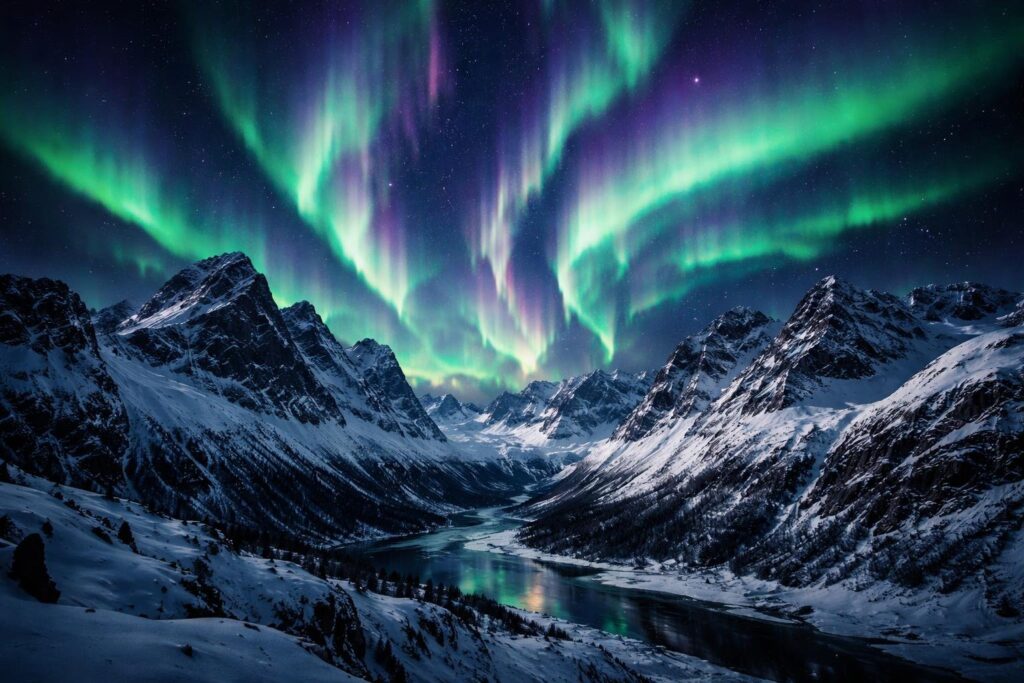
🌍 Fact 6: Also Called Northern Lights
The aurora borealis is commonly known as the northern lights in everyday language.
🌎 Fact 7: There Is a Southern Version
The southern lights are called the aurora australis and occur in the southern hemisphere.
🌌 Fact 8: Can Be Seen from Space
Astronauts can observe auroras from orbit, showing their massive scale.
You can also discover extreme environments on land in these Mount Everest facts.
🔭 Fact 9: Linked to the Sun’s Activity Cycle
Auroras become more frequent during peaks in the Sun’s 11-year activity cycle.
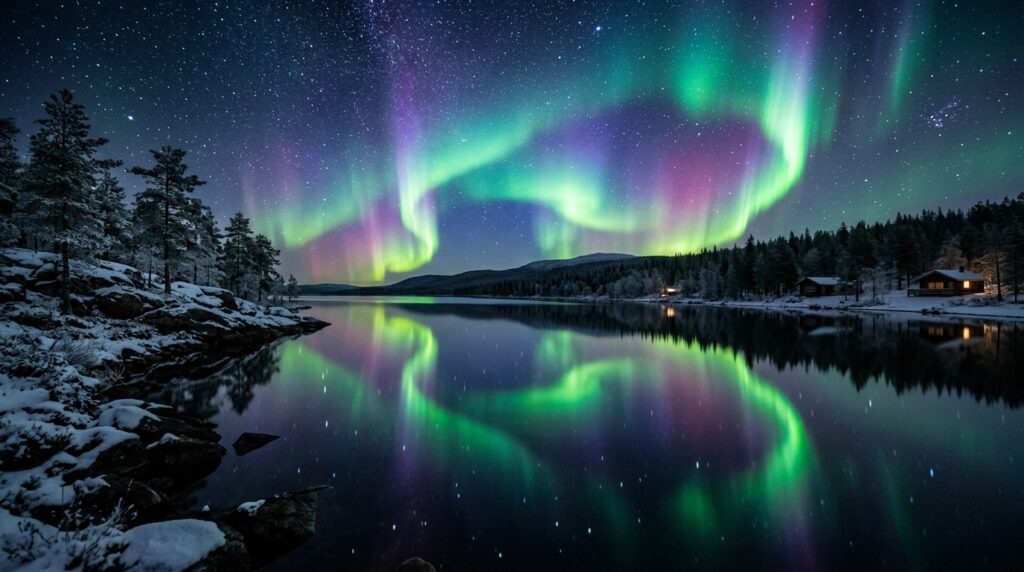
🌠 Fact 10: Can Move Quickly
Auroras can shift and change shape in seconds due to magnetic activity.
🌡️ Fact 11: Occur High in the Atmosphere
They form more than 80 km above Earth’s surface in the upper atmosphere.
🌌 Fact 12: Can Be Seen in the UK Occasionally
During strong solar storms, the aurora can be visible much further south than usual.
🧬 Fact 13: Studied by Scientists
Auroras help scientists understand space weather and Earth’s magnetic field.
🌊 Fact 14: Follow Magnetic Field Lines
Particles travel along Earth’s magnetic field toward the poles.
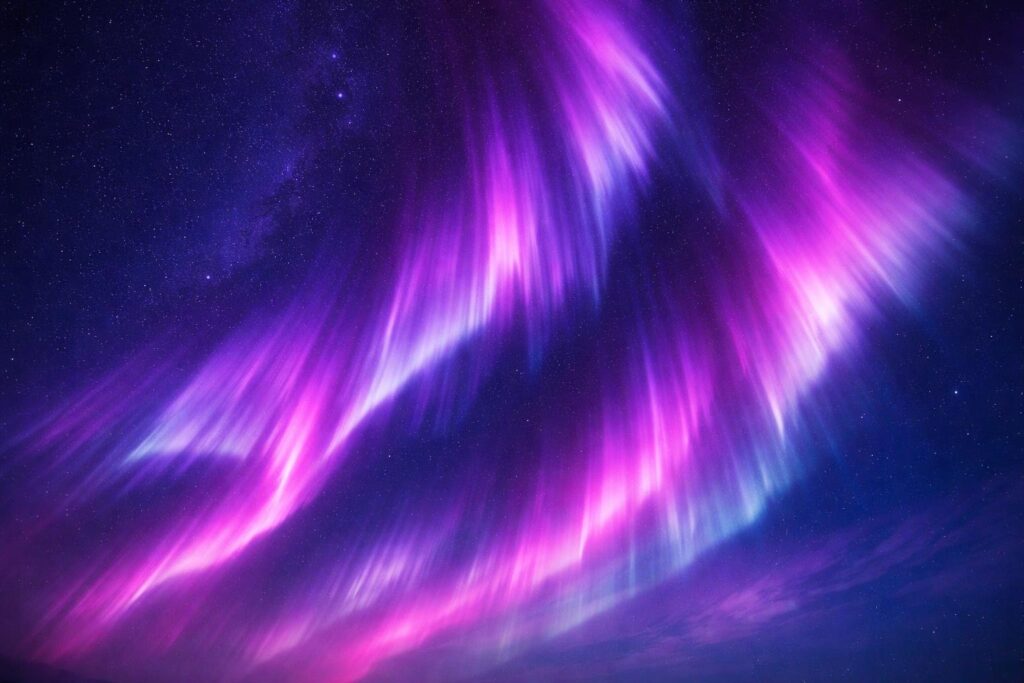
🌙 Fact 15: Best Seen in Winter
Long, dark nights in winter make auroras easier to observe.
🌌 Fact 16: Can Produce Rare Sounds
Some people report faint crackling sounds during strong auroras, though this is still studied.
🌍 Fact 17: Seen on Other Planets
Auroras are not unique to Earth, they also occur on planets like Jupiter and Saturn.
Related Facts You Might Enjoy
The aurora borealis is one of the most fascinating natural displays on Earth. You can explore icy environments in these glacier facts, or discover extreme altitudes in these Mount Everest facts. For another geological wonder, these giants causeway facts are worth exploring. Explore more in our places and landmarks facts collection.
External Authority Links
The aurora borealis is created when charged particles from the Sun interact with Earth’s magnetic field and atmosphere. According to NASA, these interactions produce the glowing lights seen near the polar regions.
The colours and patterns of the northern lights are influenced by atmospheric gases and energy levels. Research from Royal Museums Greenwich explains how these collisions create the vivid displays visible in the night sky.
FAQ Section
What causes the aurora borealis?
The aurora borealis is caused by charged particles from the Sun colliding with gases in Earth’s atmosphere, producing light.
Where can you see the northern lights?
They are most commonly seen near the Arctic, including places like Norway, Iceland, and northern Canada.
Why are the northern lights different colours?
Different gases produce different colours, oxygen creates green and red, while nitrogen produces blue and purple.
Can you see the aurora borealis in the UK?
Yes, during strong solar activity, the northern lights can sometimes be seen in parts of the UK.
Conclusion
These aurora borealis facts show why this natural phenomenon continues to fascinate people around the world. From its scientific origins to its breathtaking beauty, the northern lights remain one of Earth’s most spectacular displays.