Discover facts about time that will change how you think. Explore 15 fascinating insights about time, science, and how we measure it every day.
Facts about time reveal that something we use every day is far more complex than it seems. Time controls how we live, work, and understand the world, yet scientists still debate what time really is. From ancient calendars to modern atomic clocks, our understanding of time has evolved dramatically.
In this article, you will explore 15 detailed facts about time, covering history, science, and human perception. These insights will help you see time not just as numbers on a clock, but as one of the most fascinating forces in the universe.
The concept of measuring time has always been closely linked to record keeping, which developed alongside early communication systems explored in writing facts.
Facts About Time That Will Change Your Perspective
Fact 1: Time Is Not Just a Clock, It Is Part of the Universe
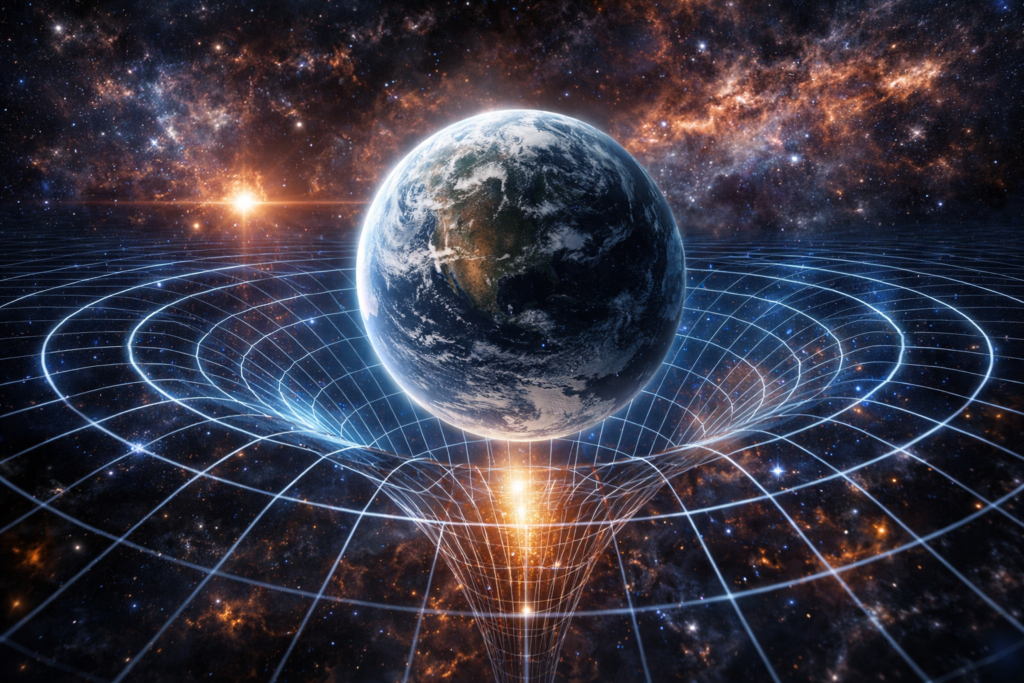
One of the most important facts about time is that it is not just something measured by clocks. In physics, time is part of space itself, forming what scientists call space-time. This means time is connected to movement, gravity, and the structure of the universe.
Fact 2: Everything You See Is in the Past
A surprising fact about time is that you never see things as they are right now. Light takes time to travel, so everything you see has already happened. Even sunlight reaching Earth is about eight minutes old.
Fact 3: Time Can Move Differently Depending on Speed
One of the most fascinating facts about time comes from Einstein’s theory of relativity. The faster you move, the slower time passes for you compared to someone standing still. This effect becomes noticeable at extremely high speeds.
Fact 4: Gravity Can Change Time
Time does not pass at the same rate everywhere. Stronger gravity slows time down slightly, meaning time moves differently on Earth compared to space. This is another key example of how facts about time challenge everyday assumptions.
Fact 5: The Smallest Unit of Time Is Almost Impossible to Imagine
Scientists measure time using extremely small units. The smallest meaningful unit is called Planck time, which is incredibly short, far beyond anything humans can experience directly.
Fact 6: The Way We Measure Time Comes From Ancient Civilisations
Many facts about time trace back to ancient Sumerians and Babylonians, who used a base-60 system. That is why we still have 60 seconds in a minute and 60 minutes in an hour today.
Fact 7: Early Clocks Were Based on Nature
Before mechanical clocks, people measured time using the Sun, stars, and water clocks. These early systems helped structure daily life long before modern technology.
Fact 8: The Pendulum Clock Changed Everything
In 1657, the invention of the pendulum clock made timekeeping far more accurate. It reduced errors significantly compared to earlier clocks and became the standard for centuries.
Fact 9: Atomic Clocks Are the Most Accurate Timekeepers
Modern facts about time rely on atomic clocks, which measure time using the vibrations of atoms. These clocks are so precise that even tiny errors can affect GPS systems.

Fact 10: A Tiny Time Error Can Affect Navigation
A difference of just one nanosecond can create a location error of around 30 centimetres in GPS systems. This shows how critical accurate time measurement is in modern technology.
Fact 11: Time Zones Were Created for Trains
Before time zones, each city kept its own local time. Standardised time zones were introduced in the 19th century to help railway systems run on schedule.
Fact 12: Time Feels Different Depending on What You Are Doing
Facts about time are not just scientific, they are psychological. Time can feel slower when you are bored and faster when you are busy or enjoying something.
Fact 13: There Is No Universal “Now”
According to modern physics, there is no single moment that everyone experiences at the same time. What is “now” for one person may not be the same for someone else.
Fact 14: Time Always Moves Forward
Time appears to move in one direction, from past to future. Scientists call this the “arrow of time,” which is linked to increasing disorder in the universe.
Fact 15: Time Might Not Be Fundamental
Some theories suggest time may not even be a basic part of reality, but instead something that emerges from deeper physical processes.
Related History Facts You Might Enjoy
Time has always played a central role in human history, shaping how civilisations organised daily life and recorded events. Early systems of measurement are closely linked to writing facts, where records helped track time and events.
Understanding time also connects with scientific progress and modern innovation. This is reflected in the internet revolution facts, where precise timing is essential for global communication systems.
👉 Explore more history and science: History facts hub
FAQ Section
What are facts about time?
Facts about time are pieces of information that explain how time works in science, history, and everyday life. They help us understand how time is measured and experienced.
Is time the same everywhere?
No, time can vary depending on speed and gravity. This means time is not constant across the universe.
How do we measure time today?
Time is measured using atomic clocks, which are extremely precise and used for global systems like GPS.
Why does time feel faster as we age?
As people age, new experiences become less frequent, making time feel like it is passing more quickly.
Conclusion
Facts about time show that something we take for granted is actually one of the most complex and fascinating aspects of reality. From ancient systems to modern physics, these facts about time reveal how deeply time shapes our understanding of the universe.